When you can’t tell the story, tell the truth.
Turning an impossible storytelling constraint into a more human donor experience—and meaningful funding growth.
ROLE / Director of Marketing & Communications
How do you make someone care when the story that usually moves them is off-limits?
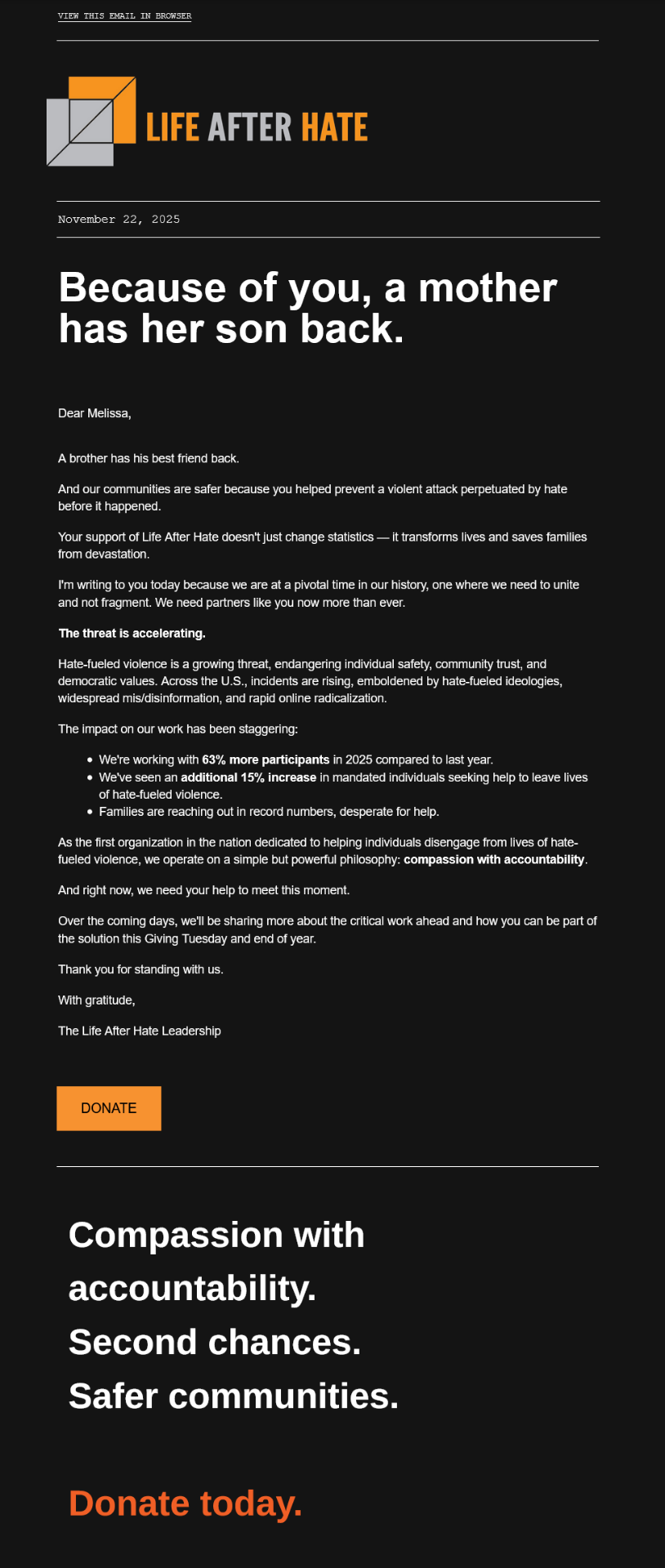
The donor ask
You gave a mother her son back.
The funding disappeared. The mission didn’t.
In 2025, previously approved federal grants were cut across the sector. Life After Hate lost direct and downstream institutional support. Its individual donor base was underdeveloped, but its email list was strong. The gap needed to close quickly.
People’s safety comes before a compelling story.
Participant anonymity is essential to Life After Hate’s work. Even innocuous details could put someone in danger. The standard nonprofit personalized impact story was not an option. I needed another way to tell the story of change without revealing any details.
The relationship is the story.
You don’t need identifying information to understand a human relationship. It could be your mother, your brother, your child. That proximity changes the stakes. I built the copy around cumulative emotional truth: “You gave a mother her son back. You gave a child their parent back.” Each sentence told a story without adding identifying detail.
A journey, not a single ask.
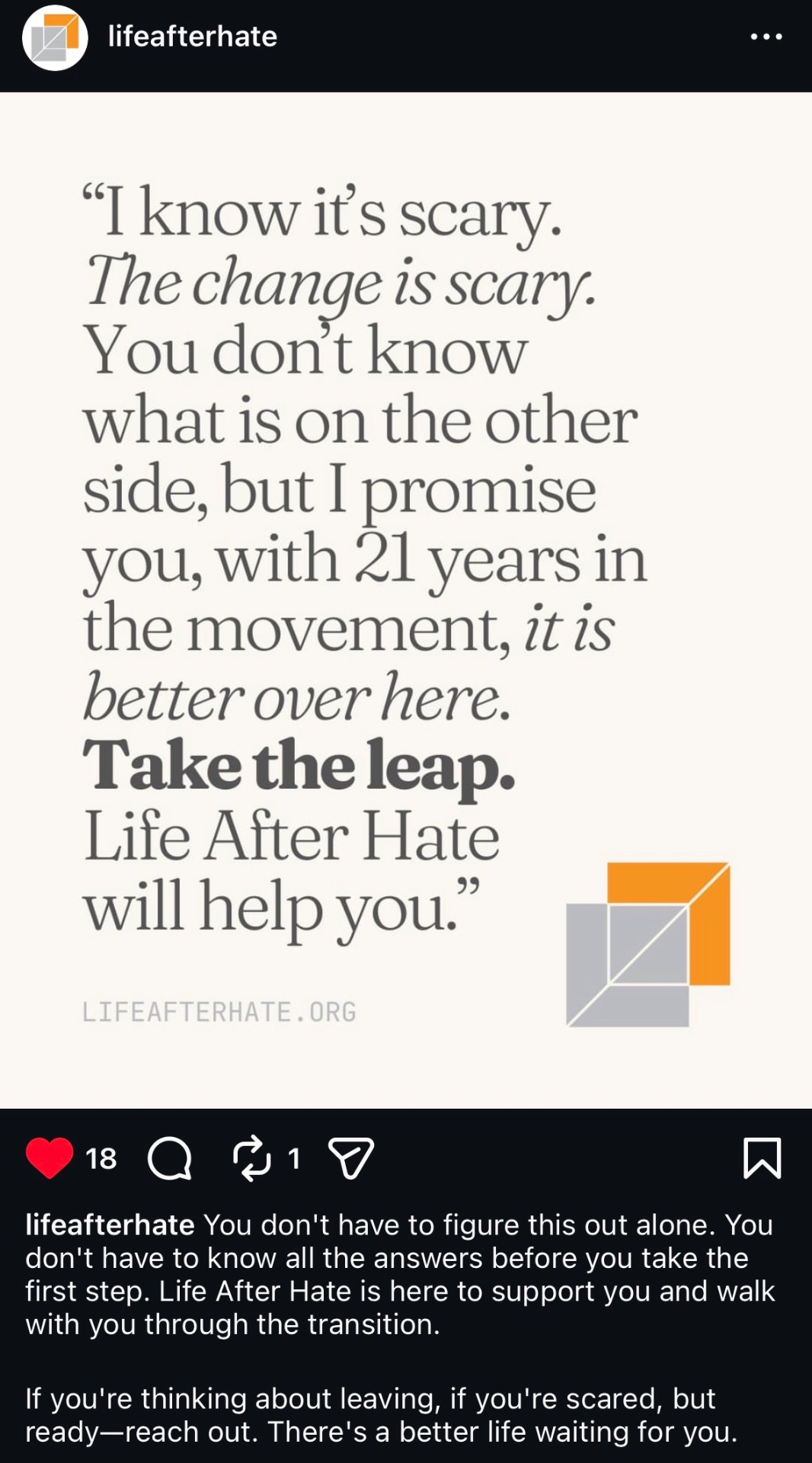
Organic social built awareness and emotional context. Email to a warm list, segmented by recency of giving, became the primary conversion channel. Recent donors received reinforcement; lapsed donors received re-engagement. The same editorial standard held across every touchpoint: human, specific, and safe.
For founders and leaders building brands with personality. Let’s compare notes.